Thoughts
The Birth of a Tasteless Designer
There’s a new kind of designer emerging. They ship faster than ever. Their Figma files are full. Their prototypes look polished. Their screens work. And yet something feels…soulless.
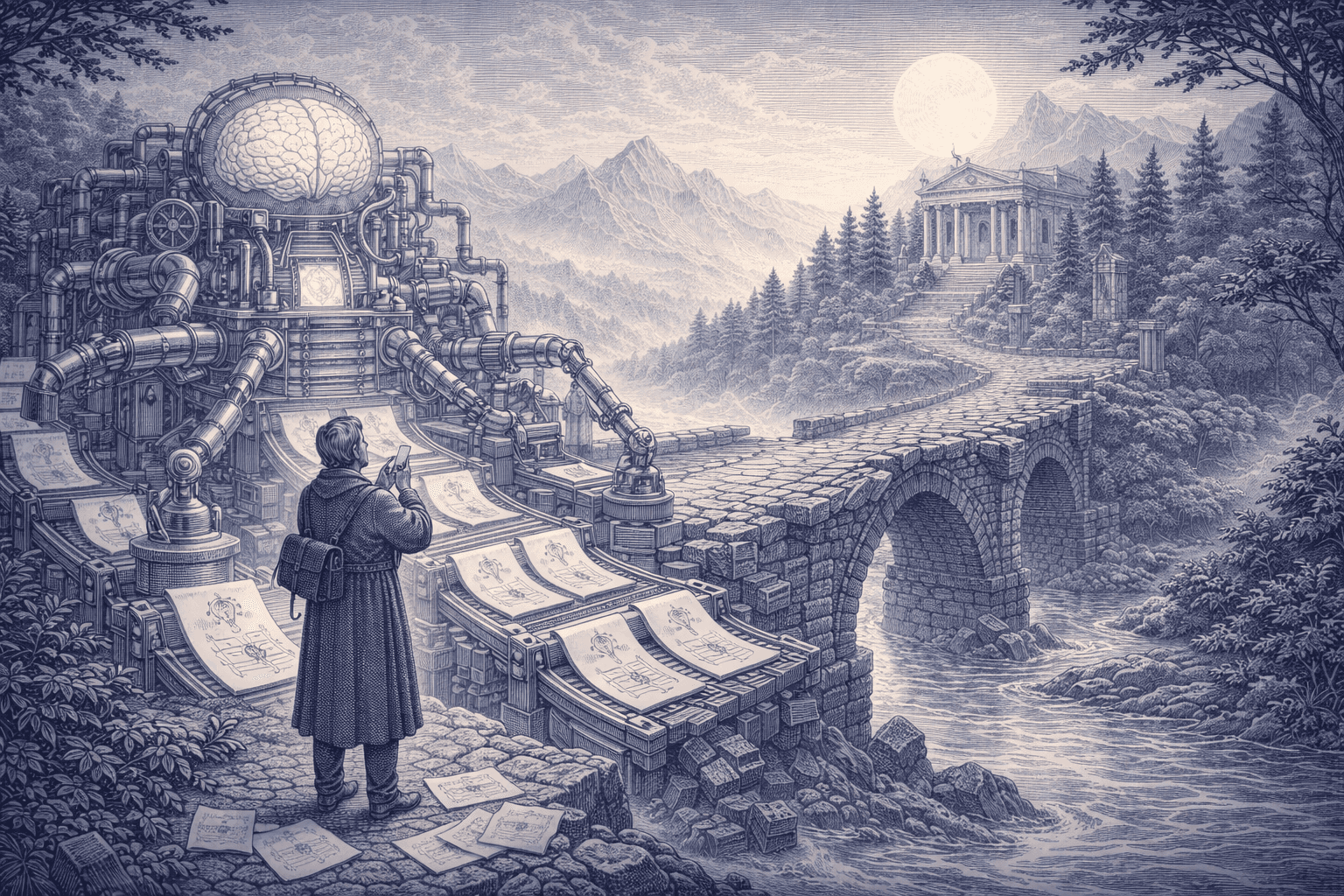
The moment I noticed it
Recently I started seeing a surge of AI-generated prototypes. Some of them were genuinely impressive. But most of them felt strangely familiar.
The same patterns. The same themes. The same layouts.
Everything technically worked. But none of it felt alive. Designers were celebrating how quickly they could generate things, not how meaningful those things were. Speed had quietly become the metric.
Then I started noticing the pattern
Once you see it, you see it everywhere. AI-generated flows that all look the same. Designers jumping straight to prompts instead of thinking. Design systems used like templates, not tools. Teams celebrating output velocity instead of craft. More and more designers advocating for AI and speed rather than users and quality of design.And slowly, something important started disappearing. Taste.
Why this is happening
Part of this shift is structural. Development speeds are faster now. Which means the pressure to ship is higher than ever.At the same time, AI arrived like a tidal wave. And with it came a quiet fear:
If I don’t use this, I’ll be left behind.
So design started changing. Less thinking. More prompting.
Design started drifting toward prompt engineering instead of problem solving. And somewhere in that shift, many designers began optimising for a different thing entirely: Looking productive.
Then I caught myself doing it too
I started experimenting heavily with AI.
Ideas in. Designs out. Fast. Very fast.
I produced a lot of work. And on the surface, it all looked good. But after a while, I noticed something unsettling.
Everything felt the same. The same patterns. The same structures.
The same visual language. Technically correct. Creatively empty.
That’s when I realized something important:
AI can produce designs.
But it cannot produce taste.
The AI illusion
AI is incredibly powerful. But it currently misses a lot of nuance. It remixes patterns that already exist. It lacks the deeper understanding of:
context
culture
emotion
craft
Most importantly, it lacks taste. Which means if you use AI without guiding it…
You don’t become a better designer. You simply become a faster generator of generic work. To produce truly interesting AI-driven work, something still needs to come from you.
Your taste.
Your judgment.
Your craft.
AI can amplify those things. But it cannot replace them.
So where does taste come from?
Not from tools. Taste is built slowly.
Through exposure.
Through experimentation.
Through obsession with details.
It comes from studying great work. From looking at art, films, architecture, products, typography. From observing the best craftsmen in the world. And most importantly:
From making things by hand.
When you build things manually, you start noticing nuances.
Spacing.
Balance.
Rhythm.
Weight.
Those small details build visual judgment. And visual judgment is the foundation of taste.
How to avoid becoming a tasteless designer
If you’re entering the industry today, the tools available to you are incredible. But they can also become shortcuts. So here are a few habits that matter.
Create by hand more often.
It builds nuance and depth.
Pay attention to tiny details.
That’s where craft lives.
After solving a problem once, try solving it again.
Find better versions of your own ideas.
Study beautiful work. Not just good work. Beautiful work. Taste grows through exposure.
The uncomfortable truth
AI will make designers faster. Design systems will make designers consistent. Templates will make designers efficient. But none of these things will make designers tasteful. Taste still requires curiosity. And effort. And care.
The birth of a tasteless designer
A tasteless designer isn’t someone who lacks tools. They often have the best tools. They ship quickly. They produce a lot.But they stop asking a very important question:
Is this actually good?
And that’s where the danger begins. Because a designer without taste doesn’t realise something is wrong.
They feel productive. They feel efficient. They feel ahead of the curve. But sometimes…
They’re just building an outlet for bad creativity at scale.